Mostrando entradas con la etiqueta GRAMMAR. Mostrar todas las entradas

jueves, 1 de febrero de 2018

RELATIVE CLAUSES / ORACIONES DE RELATIVO - ACCESO A CICLOS


Click on the link to see the presentation about the relative clauses. Remember that this is one of the topics that usually appears in the exam...
https://drive.google.com/file/d/0BwrvGq1LGz2QSDhnTWMyVS1EZ1U/view?usp=sharing

En este esquema se resume toda la información de la presentación. Lo que tenéis que tener claro es a qué sustituyen cada uno de los pronombres relativos.


miércoles, 10 de enero de 2018

miércoles, 15 de noviembre de 2017

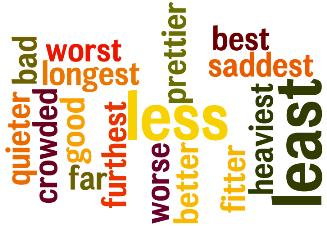
COMPARATIVE & SUPERLATIVE - PRUEBAS DE ACCESO


Click on the link to see how to form the comparative and superlative in English.

https://drive.google.com/file/d/0BwrvGq1LGz2Qb0luSTdxU2xJbTA/view?usp=sharing


Click on these links to practice comparatives and superlatives. / En estos enlaces podéis practicar los comparativos y los superlativos.

http://www.usingenglish.com/quizzes/45.html
http://www.eltbase.com/quiz/116_01.htm

martes, 24 de noviembre de 2015

PAST TENSES REVISION - PRUEBAS DE ACCESO

Revise the past simple and the past continuous in this link:
http://www.ego4u.com/en/cram-up/grammar/simpas-paspro/exercises?ex07

Learn about the origins of Thanksgiving Day and revise the past simple and past perfect tenses with the following link:
http://www.ego4u.com/en/cram-up/grammar/simpas-pasper/exercises?ex06

Test your knowledge on past simple and past perfect tenses:
https://www.ego4u.com/en/cram-up/grammar/simpas-pasper/tests?test1

miércoles, 11 de noviembre de 2015

PRONOUNS - PRUEBAS DE ACCESO

Aquí os dejo la presentación sobre los pronombres personales, posesivos y reflexivos que vimos  en clase. Echadle un vistazo y recordad que al final tenéis enlaces para practicar.

https://drive.google.com/file/d/0BwrvGq1LGz2QTmZUWW9GbnR2NFk/view?usp=sharing


miércoles, 7 de mayo de 2014

CONDITIONAL SENTENCES / ORACIONES CONDICIONALES - ACCESO A CFGS

Click on this link to see the presentation on conditional sentences we saw in class. / En este enlace encontrarás la presentación de las condicionales que vimos en clase.

https://drive.google.com/file/d/0BwrvGq1LGz2QM1VMc25QMFJpQU0/edit?usp=sharing


miércoles, 12 de marzo de 2014

RELATIVE CLAUSES - REPASO - ACCESO A CICLOS

WHO OR WHICH?


  1. Here is the book _______ I thought I had lost.
  2. A linguist is someone _________ knows a lot of languages.
  3. The tree ________ blew down in the storm was over 300 years old.
  4. Yours was the best party ________ I have ever been to.
  5. Anyone _________ wants to join the club must register now.
  6. That woman is the writer __________ wrote the best-seller.
  7. The only gift ________ I didn't like was the dress ________ my aunt gave me.
  8. This is the photo _________  I told you about.
  9. I don't know the girl ________ is going to marry my cousin.
  10. He wrote an essay  ___________ described the effects of global warming.
  11. Is there anything __________ I can do to help?
  12. The old man _________ lived above us died last week.

martes, 4 de marzo de 2014

MAKE or DO - PRUEBAS DE ACCESO

Seguro que muchas veces dudáis con estos verbos. Muy útil...
(http://www.engames.eu/make-and-do-when-should-you-use-make-and-do/)

viernes, 28 de febrero de 2014

FUTURE TENSES - ACCESO A CICLOS


Pinchad en el enlace para ver la presentación sobre los tiempos del futuro / Click on this link to see the ppt presentation about the future tenses.

https://drive.google.com/file/d/0BwrvGq1LGz2QZXA0dm5qaGMwOVk/edit?usp=sharing

martes, 21 de enero de 2014

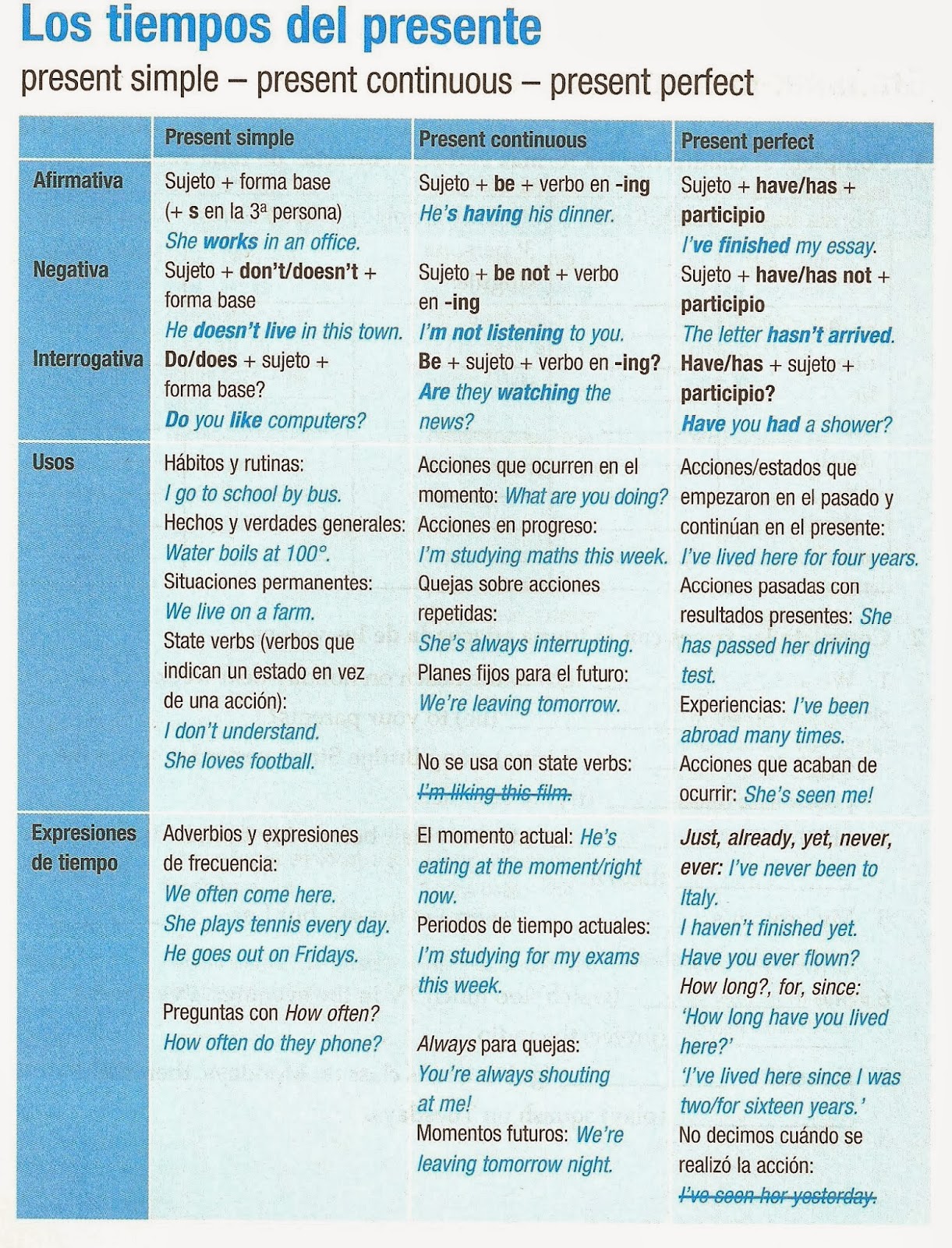
PRESENT PERFECT - PRUEBA DE ACCESO CFGS

Click on this link to see the PPT presentation we saw in class about the present perfect / Pinchando en este enlace encontraréis la presentación que vimos en clase sobre el Present Perfect 

https://drive.google.com/file/d/0BwrvGq1LGz2QQmlYb2lDVkFONUk/edit?usp=sharing

martes, 26 de noviembre de 2013

miércoles, 30 de octubre de 2013

COMPARATIVES & SUPERLATIVES


Click on this link to watch the presentation on adjetives, comparatives and superlatives we saw in class. / En el siguiente enlace tenéis la presentación de clase sobre los adjetivos, el comparativo y el superlativo.

https://drive.google.com/file/d/0BwrvGq1LGz2QODh1VnN4eGdPVFk/edit?usp=sharing

Click on these links to practice comparatives and superlatives. / En estos enlaces podéis practicar los comparativos y los superlativos.

http://www.usingenglish.com/quizzes/45.html
http://www.eltbase.com/quiz/116_01.htm

miércoles, 9 de octubre de 2013

STATE OR STATIVE VERBS - VERBOS ESTÁTICOS

En inglés hay una serie de verbos que NO SUELEN USARSE en su forma continua (presente continuo, futuro continuo…). Son verbos que describen estados, situaciones y condiciones y se llaman STATIVE verbs o STATE verbs. 

Para facilitar las cosas a la hora de estudiarlos vamos a dividirlos en grupos:

1) Verbos que expresan gustos, preferencias, o emociones: like, dislike, prefer, love, hate.                          
    Ej:
        -I don´t like meat. No me gusta la carne.
        -I  love pop music. Me encanta la música pop.

2) Verbos que expresan deseo o necesidad: want, wish, need...
    Ej:
        -I want an ice cream. Quiero un helado.

3) Verbos que expresan pensamientos u opiniones: agree, disagree, believe, understand, know,   remember, guess...
    Ej:
        -I don´t understand her accent. No entiendo su acento.
        - Dan thinks the book is wonderful. Dan cree que el libro es estupendo.

4) Verbos relacionados con la percepción y los sentidos: sound, hear, taste, see, smell,  feel...
     Ej:
          - The flower smells good. La flor huele bien.    

5) Verbos que describen el precio, peso, medida, contenido o características de algo: cost, weigh, measure, consist, contain.
     Ej:
- The parcel weighs 3kg and contains 6 video games. El paquete pesa 3kg y contiene 6 videojuegos.

6) Verbos que expresan posesión: have got, belong, own...
     Ej:
      -This car belongs to John. Este coche pertenece a John.

¡Cuidado! algunos de estos verbos pueden ser tanto estáticos como dinámicos, ya que pueden tener más de un significado. Algunos de ellos son: be, have, think, see, smell o taste.

Pero esto mejor lo dejamos para otro momento ¿no?